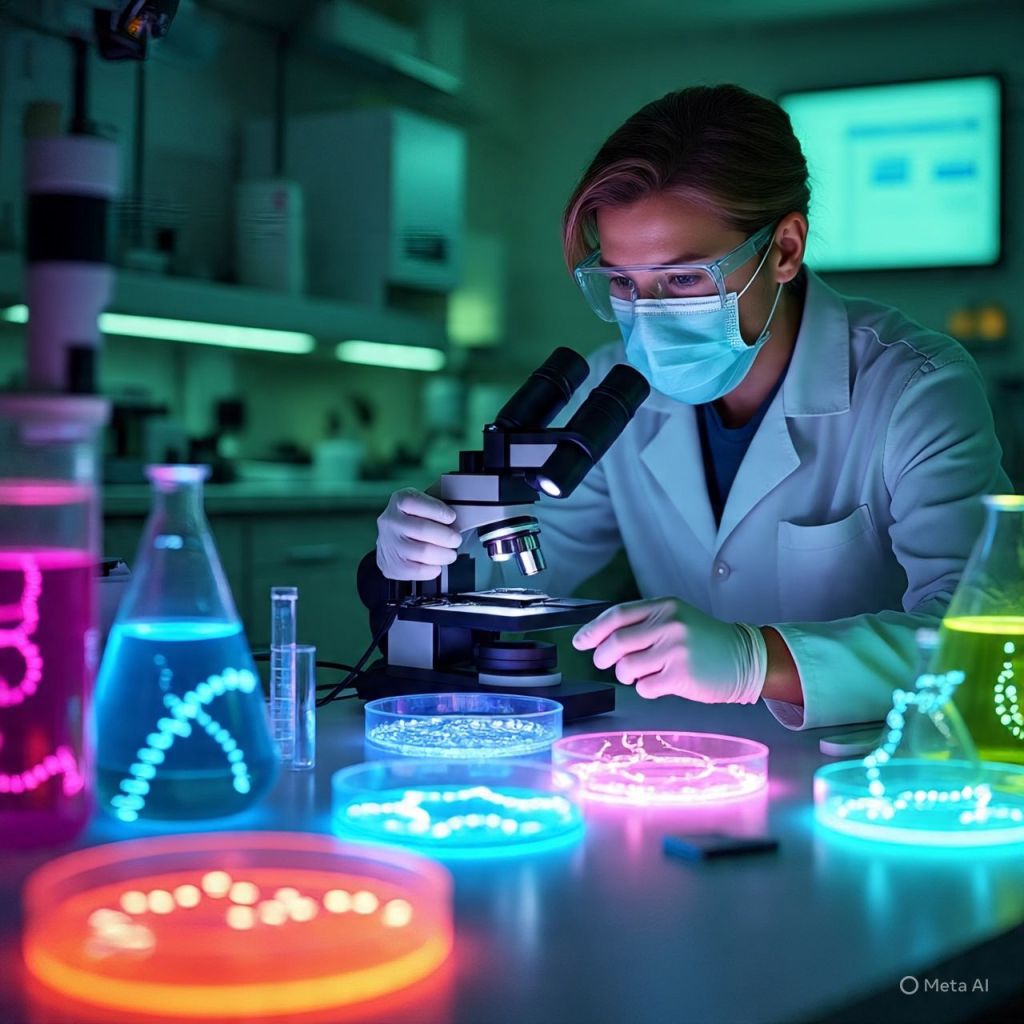
Discover what gene editing is, how CRISPR works, real-world uses in medicine and agriculture, ethical debates, and what the future holds—explained in a clear, exciting, human way.
Introduction
If biology had a “find and replace” button, gene editing would be it. Imagine correcting a typo in your DNA the way you’d fix a misspelled word in a document. That’s the promise—and the controversy—of gene editing: a set of technologies that let scientists precisely alter the genetic instructions inside living cells.
This field has leapt from lab curiosity to global headline in just over a decade. From experimental treatments for inherited diseases to drought-resistant crops and bold ideas about preventing pandemics, gene editing is rapidly becoming one of the defining technologies of the 21st century. Let’s unpack what it is, how it works, where it’s already making a difference, and the questions we still need to answer.
What Is Gene Editing?
Gene editing refers to techniques that allow scientists to add, remove, or change specific pieces of DNA within an organism’s genome. DNA is the molecular “instruction manual” that tells cells how to grow, function, and repair themselves. When a gene contains an error—or when we want to enhance a trait—gene editing tools can target that exact location and make a precise change.
Think of the genome as a massive library of instructions. Traditional genetic modification often involved inserting a new “page” somewhere in the library. Gene editing, by contrast, is like opening a specific sentence on a specific page and correcting it with surgical precision.
Why It Matters
- Precision: Edits can target exact DNA sequences.
- Speed: What once took years can now happen in weeks.
- Versatility: Works across plants, animals, and human cells.
- Potential impact: From curing disease to improving food security.
The Breakthrough: CRISPR and Its Rise
Modern gene editing took off with a tool known as CRISPR, short for Clustered Regularly Interspaced Short Palindromic Repeats. While the name is a mouthful, the concept is elegantly simple.
CRISPR is based on a natural defense system used by bacteria. When viruses attack, bacteria store fragments of the viral DNA. If the same virus returns, bacteria use a molecular “guide” to find and cut the invader’s genetic material. Scientists adapted this system into a programmable editing tool.
Two researchers are widely credited with pioneering CRISPR’s practical use in gene editing: Jennifer Doudna and Emmanuelle Charpentier. Their work transformed a bacterial immune trick into a universal technology used across biology labs worldwide.
How CRISPR Works (In Simple Terms)
- Guide RNA acts like a GPS, leading the system to a specific DNA sequence.
- Cas enzyme (often Cas9) works like molecular scissors, cutting the DNA at that spot.
- Cell repair process kicks in, allowing scientists to disable a gene, correct it, or insert a new sequence.
That’s the basic flow: find, cut, and repair.
Real-World Applications: Where Gene Editing Is Already Changing Lives
1. Medicine: Toward Genetic Cures
Gene editing’s most exciting promise lies in medicine. Many diseases are caused by a single faulty gene. If you can correct that gene, you could potentially cure the condition at its source rather than just managing symptoms.
Areas under active research include:
- Sickle cell disease
- Cystic fibrosis
- Inherited blindness
- Certain cancers
- Rare metabolic disorders
Experimental therapies are already showing life-changing results in clinical trials. Some patients who required constant treatment now experience long-term remission after a single gene-editing intervention.
Companies such as Editas Medicine and Intellia Therapeutics are pushing these therapies toward mainstream medicine, working on treatments that directly edit genes inside the body.
2. Agriculture: Smarter, Stronger Crops
Gene editing is also transforming how we grow food. Instead of relying on slow breeding methods, scientists can now tweak plant DNA to improve resilience and nutrition.
Potential benefits:
- Drought-resistant crops
- Disease-resistant plants
- Improved nutritional content
- Reduced pesticide use
- Faster crop development cycles
This could help address global food shortages while reducing agriculture’s environmental footprint.
3. Environmental Conservation
Scientists are exploring gene editing to protect endangered species and control invasive ones. One proposed method, called a gene drive, could spread beneficial traits through wild populations—like resistance to a deadly disease.
There’s also research into editing microbes that can break down plastic waste or capture carbon more efficiently. The environmental potential is massive, though it comes with complex ecological risks.
The Ethics: Big Power, Big Questions
When a technology allows us to rewrite life’s code, ethical debates are inevitable. Gene editing raises profound questions about safety, fairness, and the boundaries of human intervention.
Key Ethical Concerns
1. Germline Editing
Changes made to embryos can be inherited by future generations. This raises questions about consent and long-term consequences.
2. Equity and Access
Will gene therapies be available to everyone—or only to those who can afford them?
3. Enhancement vs. Treatment
Should gene editing be used only to cure disease, or also to enhance traits like intelligence or physical ability?
4. Ecological Risk
Releasing edited organisms into the environment could have unintended consequences.
These questions don’t have simple answers. What’s clear is that governance, regulation, and public dialogue must evolve alongside the science.
Safety: How Controlled Is Gene Editing?
Early concerns focused on “off-target effects”—unintended edits elsewhere in the genome. Today’s tools are far more precise, and researchers use extensive screening to detect unintended changes.
Still, gene editing is not risk-free. Safety evaluation typically includes:
- Lab testing in cells
- Animal studies
- Carefully monitored human trials
- Long-term follow-up
Regulatory agencies worldwide require strict oversight before therapies can reach patients.
The Future: Where Gene Editing Is Headed
Gene editing is moving from experimental promise to practical application faster than many experts predicted. Several trends are shaping the next phase of the field.
1. More Precise Tools
New editing techniques allow scientists to change single DNA letters without cutting the entire strand. This dramatically reduces unintended effects and expands what’s possible.
2. In-Body Editing
Instead of removing cells, editing them, and returning them to the patient, researchers are developing therapies that work directly inside the body—like delivering editing instructions to liver cells via injection.
3. Personalized Medicine
As genetic sequencing becomes more common, treatments could be tailored to each person’s unique DNA profile. Medicine may shift from “one size fits all” to truly individualized care.
4. Preventive Genetic Medicine
In the long term, gene editing could help prevent certain diseases before symptoms appear. This would transform healthcare from reactive to proactive.
Common Myths About Gene Editing
Myth 1: It’s the Same as Cloning
Gene editing changes DNA sequences; cloning creates genetic copies of organisms. They are completely different processes.
Myth 2: It Creates “Designer Babies” Today
While technically possible to edit embryos, strict regulations limit such applications in most countries.
Myth 3: It’s 100% Safe or 100% Dangerous
Reality sits in between. Like any powerful technology, gene editing carries both promise and risk.
Myth 4: It Only Affects Humans
Gene editing is widely used in plants, animals, and microbes.
Why This Technology Feels So Personal
Gene editing isn’t just about science—it’s about identity. DNA is deeply tied to how we understand health, inheritance, and even what it means to be human. That’s why discussions around gene editing often feel intense: they touch on hope, fear, and possibility all at once.
For families affected by genetic diseases, gene editing represents something profoundly emotional: the chance that future generations might never face the same struggle.
For society, it’s a test of how responsibly we can wield transformative power.
The Big Picture: A Turning Point in Biology
Human history has been shaped by tools that extend our abilities—fire, agriculture, electricity, computing. Gene editing may belong in that lineage. It gives us the ability not just to observe life, but to rewrite it.
Whether gene editing becomes primarily a healing technology, an enhancement tool, or something in between depends on choices we make collectively—scientists, policymakers, and citizens alike.
What’s certain is this: we are no longer just readers of the genetic code. We are becoming editors.
Final Thoughts
Gene editing sits at the intersection of possibility and responsibility. It offers a future where inherited diseases could be cured, food could be more resilient, and ecosystems could be protected. At the same time, it challenges us to think deeply about ethics, safety, and fairness.
The technology itself is neither miracle nor menace—it’s a tool. Its impact will depend on how wisely we use it.
As research advances and public understanding grows, one thing is clear: gene editing isn’t science fiction anymore. It’s part of our present—and it’s shaping our future.
- From Awareness to Action: How to Turn What You Know Into Real Health, Freedom, and Results|When The Body Speaks Online 📖Writer: Alfred Okoko, Founder of the Natural Remission Protocol.“I help people reverse chronic conditions naturally and reclaim their health.” Discover how to turn awareness into action with simple daily habits that support real health, freedom, and clarity. Learn how to stop overthinking and start living intentionally. Introduction Awareness is powerful. It opens your eyes.It changes… Read more: From Awareness to Action: How to Turn What You Know Into Real Health, Freedom, and Results|When The Body Speaks Online 📖
- Common Mistakes People Make When Trying to Heal Naturally (And How to Avoid Them)|When The Body Speaks Online 📖Writer: Alfred Okoko, Founder of the Natural Remission Protocols“I help people reverse chronic conditions naturally and reclaim their health.” Avoid the most common mistakes people make when trying to heal naturally—learn what slows progress and how to achieve real, lasting results. Introduction Natural healing is powerful. It’s helped countless people reduce symptoms, regain energy, and… Read more: Common Mistakes People Make When Trying to Heal Naturally (And How to Avoid Them)|When The Body Speaks Online 📖
- Erectile Dysfunction Home Remedies: Supporting Circulation, Confidence, and Whole-Body Health|When The Body Speaks Online 📖Discover supportive home remedies for erectile dysfunction that focus on circulation, stress reduction, and whole-body health. Natural strategies inspired by When The Body Speaks. Introduction Erectile dysfunction (ED) is often discussed only in physical terms, yet it is closely connected to circulation, stress levels, emotional wellbeing, energy balance, and lifestyle patterns. For many men, changes… Read more: Erectile Dysfunction Home Remedies: Supporting Circulation, Confidence, and Whole-Body Health|When The Body Speaks Online 📖
- Psychoneuroimmunology: How Thoughts and Emotions Influence the Immune System and Healing|When The Body Speaks Online 📖Writer: Alfred Okoko, Founder of the Natural Remission Protocols“I help people reverse chronic conditions naturally and reclaim their health.” Discover how psychoneuroimmunology reveals the powerful connection between the mind and immune system. Learn how thoughts, emotions, and stress hormones influence inflammation, healing, and recovery. Introduction For many years, medicine treated the mind and body as… Read more: Psychoneuroimmunology: How Thoughts and Emotions Influence the Immune System and Healing|When The Body Speaks Online 📖
- Belief Does Not Cure Disease—But It Can Open the Door to Healing|When The Body Speaks Online 📖Writer: Alfred Okoko, Founder of the Natural Remission Protocols“I help people reverse chronic conditions naturally and reclaim their health.” Belief alone may not cure disease, but it can powerfully influence healing. Discover how mindset, hope, and emotional resilience support the body’s natural recovery process. Introduction In the world of health and wellness, there are two… Read more: Belief Does Not Cure Disease—But It Can Open the Door to Healing|When The Body Speaks Online 📖
 When The Body Speaks Online