
Skip to content
    • About
    • Blog
    • Contact
    • Cookie Consent & GDPR Compliance
    • Home Page
    • Privacy Policy
    • Terms and Conditions
    • When the Body Speaks: The Herbal Path to True Healing Book|Alfred Okoko
    • When the Body Speaks|By Alfred Okoko

When The Body Speaks Online

  • Stories of Listening and Healing – Real-Life Lessons from Body Awareness|When The Body Speaks Online 📖

    February 1st, 2026
    Listen To Your Body

    Discover how listening to your body transforms health. Real-life stories illustrate how symptoms act as messengers, guiding you to balance, wellness, and holistic healing.

    Introduction

    Our bodies speak to us every day. From subtle fatigue to chronic discomfort, from tension to digestive upset, these signals are messages, not enemies. Yet most of us treat symptoms as obstacles, problems to suppress or ignore.

    The truth is transformative: listening to your body changes everything. By interpreting symptoms as messages and responding with care, you unlock the wisdom your body has been communicating all along.

    In this article, we explore real-life stories of listening and healing, showing how awareness, support, and gentle interventions restore balance, energy, and vitality.


    Check Out ✔️ When The Body Speaks: The Herbal Path To True Healing


    Why Listening Matters

    Symptoms are rarely random. Headaches, fatigue, bloating, and tension are guides pointing toward imbalance, often across multiple systems: digestive, nervous, circulatory, endocrine, and immune.

    Ignoring these messages may lead to chronic conditions, frustration, and anxiety. Listening, on the other hand, empowers you to:

    • Identify patterns in your body’s responses
    • Address root causes instead of masking symptoms
    • Build resilience and long-term wellness
    • Cultivate a positive, collaborative relationship with your body

    Stories of real people illustrate the profound impact of this approach.

    Sofia’s Journey: Bloating and Fatigue

    Sofia struggled with chronic bloating and low energy. She tried medications and restrictive diets, yet relief was temporary. Frustrated and exhausted, she realized she had been ignoring her body’s subtle cues.

    By paying attention, she noticed patterns:

    • Bloating worsened after skipped or irregular meals
    • Fatigue spiked on stressful days
    • Digestive discomfort was accompanied by emotional tension

    Sofia adopted a holistic approach:

    • Mindful eating: she slowed down, chewed thoroughly, and observed how foods affected her digestion.
    • Herbal support: gentle teas like chamomile and peppermint aided her gut and reduced inflammation.
    • Restorative practices: yoga, meditation, and scheduled breaks reduced stress and supported energy balance.

    Over time, her symptoms improved—not because she forced her body, but because she listened and responded intelligently. Sofia’s story shows how paying attention transforms symptoms from frustration into guidance.

    Ethan’s Journey: Headaches and Tension

    Ethan experienced recurring headaches and chronic tension, which interfered with work and daily life. Initially, he viewed them as enemies, masking them with medication or ignoring them altogether.

    When he shifted perspective and listened, he discovered:

    • Long hours at a desk caused postural strain
    • Dehydration and irregular meals triggered headaches
    • Emotional stress was a recurring contributor to tension

    Ethan implemented a multi-pronged strategy:

    • Posture and movement: stretching breaks, ergonomic adjustments, and gentle yoga
    • Hydration and nutrition: consistent meals with balanced nutrients
    • Stress management: journaling, meditation, and mindful breathing
    • Emotional awareness: acknowledging unprocessed feelings rather than suppressing them

    By addressing the root causes, Ethan not only relieved his headaches but also improved overall vitality, mood, and focus.

    The Core Lesson: Symptoms Are Messengers

    These stories highlight a crucial principle: symptoms are not punishments or enemies—they are messengers guiding you toward balance.

    Key takeaways include:

    1. Awareness is the first step: Notice patterns, triggers, and correlations in your body’s signals.
    2. Curiosity replaces fear: Ask why the symptom exists rather than trying to eliminate it immediately.
    3. Support, don’t suppress: Use nutrition, movement, rest, stress management, and herbal remedies to assist your body.
    4. Small, consistent actions matter: Gentle, ongoing practices compound over time to restore balance.
    5. Mind-body connection is central: Emotional, mental, and physical health are deeply intertwined.

    How to Apply Listening in Your Life

    1. Track Symptoms and Patterns
      Keep a journal of physical sensations, emotional states, meals, movement, sleep, and stress. This helps you decode triggers and identify trends.
    2. Adopt a Curious Mindset
      Ask questions such as:
      • What is my body trying to communicate?
      • Which system might be signaling imbalance?
      • What small action can I take to support balance today?
    3. Implement Holistic Support
      • Nutrition: whole, nutrient-dense foods
      • Movement: gentle, mindful exercise
      • Rest: quality sleep and restorative practices
      • Stress Management: meditation, breathwork, journaling
      • Herbal Support: teas, tinctures, and natural remedies
    4. Observe Changes Over Time
      Notice how your body responds. Adjust your approach and celebrate improvements, however small.

    Why Listening Transforms Health

    When you respond to your body’s messages with attention, care, and support, several transformative changes occur:

    • Reduced chronic stress: Your nervous system calms when you honor its signals.
    • Improved energy: Fatigue decreases as nutritional, movement, and rest needs are met.
    • Digestive balance: Mindful eating and supportive habits restore gut function.
    • Pain reduction: Posture, movement, and stress management reduce tension and inflammation.
    • Emotional resilience: Awareness and processing of emotions enhance mental well-being.

    Listening fosters a collaborative relationship with your body, empowering long-term, sustainable wellness.

    Small Stories, Big Lessons

    Even small observations can create meaningful change:

    • Noticing bloating after skipping breakfast may lead to regular meal patterns.
    • Feeling tension in shoulders after a stressful call may prompt deep breathing or stretching.
    • Experiencing fatigue after late nights may encourage earlier sleep routines.

    Every symptom becomes a guidepost when approached with curiosity and support.

    Creating a Lifestyle of Listening

    To integrate this practice into your daily life:

    1. Morning Check-In: Ask, “How does my body feel today?”
    2. Mindful Eating: Observe digestion, energy, and emotions around meals.
    3. Movement Breaks: Include short stretches, walks, or yoga sessions.
    4. Stress Awareness: Notice emotional triggers and use calming practices.
    5. Evening Reflection: Journal insights, track patterns, and plan supportive actions.

    Consistency develops a deep connection with your body, making listening an intuitive part of life.

    Conclusion: Transforming Health Through Listening

    Sofia and Ethan’s stories remind us that health is a partnership, not a battle. Symptoms are messages, not enemies. By listening attentively and responding with care, we unlock:

    • Insight into our bodies
    • Awareness of triggers and patterns
    • Sustainable, long-term balance
    • Empowerment in our wellness journey

    Your body is constantly communicating. Every signal, from fatigue to tension to digestive discomfort, is an invitation to observe, understand, and support.

    The path to vibrant health begins with a simple question:

    “What is my body trying to tell me today?”

    Answering this question consistently transforms symptoms into guides, fear into curiosity, and health into a lifelong journey of listening, learning, and healing.

    Read More Articles
    • From Awareness to Action: How to Turn What You Know Into Real Health, Freedom, and Results|When The Body Speaks Online 📖
      Writer: Alfred Okoko, Founder of the Natural Remission Protocol.“I help people reverse chronic conditions naturally and reclaim their health.” Discover how to turn awareness into action with simple daily habits that support real health, freedom, and clarity. Learn how to stop overthinking and start living intentionally. Introduction Awareness is powerful. It opens your eyes.It changes… Read more: From Awareness to Action: How to Turn What You Know Into Real Health, Freedom, and Results|When The Body Speaks Online 📖
    • Common Mistakes People Make When Trying to Heal Naturally (And How to Avoid Them)|When The Body Speaks Online 📖
      Writer: Alfred Okoko, Founder of the Natural Remission Protocols“I help people reverse chronic conditions naturally and reclaim their health.” Avoid the most common mistakes people make when trying to heal naturally—learn what slows progress and how to achieve real, lasting results. Introduction Natural healing is powerful. It’s helped countless people reduce symptoms, regain energy, and… Read more: Common Mistakes People Make When Trying to Heal Naturally (And How to Avoid Them)|When The Body Speaks Online 📖
    • Erectile Dysfunction Home Remedies: Supporting Circulation, Confidence, and Whole-Body Health|When The Body Speaks Online 📖
      Discover supportive home remedies for erectile dysfunction that focus on circulation, stress reduction, and whole-body health. Natural strategies inspired by When The Body Speaks. Introduction Erectile dysfunction (ED) is often discussed only in physical terms, yet it is closely connected to circulation, stress levels, emotional wellbeing, energy balance, and lifestyle patterns. For many men, changes… Read more: Erectile Dysfunction Home Remedies: Supporting Circulation, Confidence, and Whole-Body Health|When The Body Speaks Online 📖
    • Psychoneuroimmunology: How Thoughts and Emotions Influence the Immune System and Healing|When The Body Speaks Online 📖
      Writer: Alfred Okoko, Founder of the Natural Remission Protocols“I help people reverse chronic conditions naturally and reclaim their health.” Discover how psychoneuroimmunology reveals the powerful connection between the mind and immune system. Learn how thoughts, emotions, and stress hormones influence inflammation, healing, and recovery. Introduction For many years, medicine treated the mind and body as… Read more: Psychoneuroimmunology: How Thoughts and Emotions Influence the Immune System and Healing|When The Body Speaks Online 📖
    • Belief Does Not Cure Disease—But It Can Open the Door to Healing|When The Body Speaks Online 📖
      Writer: Alfred Okoko, Founder of the Natural Remission Protocols“I help people reverse chronic conditions naturally and reclaim their health.” Belief alone may not cure disease, but it can powerfully influence healing. Discover how mindset, hope, and emotional resilience support the body’s natural recovery process. Introduction In the world of health and wellness, there are two… Read more: Belief Does Not Cure Disease—But It Can Open the Door to Healing|When The Body Speaks Online 📖

  • The Body as a Teacher: How Listening to Your Symptoms Leads to True Healing|Where The Body Speaks Online 📖

    January 31st, 2026
    Body Wisdom

    Your body is a powerful teacher, communicating through symptoms, sensations, and energy shifts. Learn how listening to your body’s signals transforms healing into understanding, balance, and long-term wellness.

    The Body as a Teacher

    Your body is always speaking.

    Not in words, but in sensations.
    Not in lectures, but in signals.
    Not in punishment, but in guidance.

    From the moment you wake up to the moment you rest, your body communicates through energy levels, tension, digestion, mood, and emotion. Yet most of us were taught to ignore this language—to override fatigue, suppress pain, and silence discomfort as quickly as possible.

    But your body is not broken.
    It is teaching.

    Healing begins the moment you stop resisting these messages and start listening.


    Check Out ✔️ When The Body Speaks: The Herbal Path To True Healing


    Understanding the Language of the Body

    The body does not communicate randomly. Every sensation carries meaning.

    Fatigue may be asking for rest, nourishment, hydration, or emotional space.
    Digestive discomfort may signal stress, imbalance in the gut, or the need for dietary simplicity.
    Headaches may reflect dehydration, tension, overstimulation, or nervous system overload.
    Muscle tightness may indicate emotional stress or lack of movement.

    These signals are not failures. They are feedback.

    When you view the body as a teacher, symptoms become lessons rather than obstacles.

    Why Symptoms Are Not the Enemy

    Modern culture often frames symptoms as problems to eliminate. Pain is treated as an inconvenience. Fatigue is seen as weakness. Discomfort is labeled dysfunction.

    This mindset creates conflict with the body.

    In reality, symptoms are protective. They appear to get your attention before deeper damage occurs. They slow you down when rest is required. They signal imbalance before crisis.

    When symptoms are ignored, they often grow louder.

    Listening early allows gentle correction. Ignoring signals forces the body to escalate.

    Healing Begins With Curiosity, Not Control

    A teaching body responds best to curiosity.

    Instead of asking:

    • How do I make this stop?

    Ask:

    • What is my body trying to show me?

    This shift changes the entire healing process. You stop fighting symptoms and start learning from them.

    Curiosity creates awareness. Awareness leads to insight. Insight leads to meaningful change.

    The Body Reflects Lifestyle and Emotion

    The body records your lived experience.

    Sleep patterns, stress levels, emotional suppression, movement habits, and nourishment all leave signatures in the body. Over time, these patterns express themselves physically.

    For example:

    • Chronic stress may show up as digestive issues or hormonal imbalance
    • Emotional overload may manifest as muscle tension or fatigue
    • Prolonged sitting may result in stiffness and pain
    • Poor sleep may lead to inflammation and brain fog

    The body does not separate physical and emotional experiences. It integrates them.

    Listening to Subtle Signals Prevents Bigger Imbalances

    The body always starts with whispers.

    A slight headache.
    Mild bloating.
    Momentary fatigue.
    Subtle irritability.

    These are early teaching moments.

    When listened to, small adjustments often restore balance quickly. When ignored, these whispers become shouts—chronic pain, persistent illness, or burnout.

    The most effective healing happens early, when the body is still gently guiding you.

    The Body as an Orchestra

    Imagine your body as a finely tuned orchestra.

    Each system—digestive, nervous, circulatory, endocrine, immune, and musculoskeletal—plays a vital role. When all systems are in harmony, the music flows effortlessly.

    When one system falls out of rhythm, the entire performance is affected.

    Digestive imbalance may impact immunity.
    Nervous system overload may disrupt hormones.
    Inflammation may influence mood and energy.

    Healing is not about fixing one instrument in isolation. It is about restoring harmony across the entire orchestra.

    Symptoms Point Toward Balance

    A teaching body does not demand perfection. It seeks balance.

    If energy is low, the lesson may be rest.
    If digestion is off, the lesson may be simplicity.
    If pain appears, the lesson may be movement or emotional release.
    If anxiety rises, the lesson may be nervous system regulation.

    Every symptom points toward an adjustment—not a failure.

    Rebuilding Trust With the Body

    Many people feel disconnected from their bodies after years of ignoring signals. Viewing the body as a teacher rebuilds trust.

    When you listen and respond consistently:

    • Symptoms become clearer, not scarier
    • The body relaxes instead of resisting
    • Healing feels cooperative rather than combative

    Trust is a healing condition in itself.

    Awareness Transforms Healing Into Partnership

    When the body is seen as a teacher, healing becomes a partnership.

    You bring attention.
    The body brings feedback.
    Together, balance is restored.

    This partnership removes fear and replaces it with understanding. You no longer feel at war with your body. You feel guided by it.

    The Wisdom Within the Body

    The body carries ancient wisdom. It knows when to slow down, when to recover, and when to restore balance.

    Your role is not to control this intelligence, but to respect it.

    Listening to your body reconnects you to instincts that modern life often silences.

    Daily Practices That Strengthen Listening

    Learning from the body is a daily practice.

    This includes:

    • Checking in with energy levels
    • Noticing tension or ease
    • Observing digestion and mood
    • Reflecting on emotional responses
    • Adjusting habits accordingly

    Over time, these small moments of attention sharpen intuition and reduce confusion.

    Healing Is Not Self-Blame

    Listening to the body does not mean blaming yourself for symptoms.

    Teaching is compassionate, not critical.

    Symptoms are invitations—not judgments. They offer information so you can respond with care, not shame.

    From Resistance to Alignment

    When you resist the body, symptoms persist.
    When you align with the body, symptoms guide change.

    Alignment creates flow. Flow supports healing.

    Long-Term Wellness Comes From Learning, Not Fighting

    Force creates short-term results. Learning creates lasting health.

    When you allow your body to teach you:

    • You prevent recurring issues
    • You respond earlier
    • You create sustainable habits
    • You feel empowered rather than dependent

    Healing becomes an ongoing conversation rather than a crisis response.

    The Body as a Lifelong Guide

    Your body does not stop teaching once symptoms resolve. It continues to guide you toward balance, energy, and vitality.

    Each phase of life brings new lessons—and your body adapts when supported.

    Final Thoughts: Listen and Learn

    Your body is not your enemy.
    Your symptoms are not punishments.
    They are messages—clear, honest, and purposeful.

    Healing begins when you listen.

    When you treat your body as a teacher, you stop fighting and start learning. You move from confusion to clarity, from resistance to respect.

    And in that shift, healing becomes not only possible—but inevitable.

    Read More Articles
    • From Awareness to Action: How to Turn What You Know Into Real Health, Freedom, and Results|When The Body Speaks Online 📖
      Writer: Alfred Okoko, Founder of the Natural Remission Protocol.“I help people reverse chronic conditions naturally and reclaim their health.” Discover how to turn awareness into action with simple daily habits that support real health, freedom, and clarity. Learn how to stop overthinking and start living intentionally. Introduction Awareness is powerful. It opens your eyes.It changes… Read more: From Awareness to Action: How to Turn What You Know Into Real Health, Freedom, and Results|When The Body Speaks Online 📖
    • Common Mistakes People Make When Trying to Heal Naturally (And How to Avoid Them)|When The Body Speaks Online 📖
      Writer: Alfred Okoko, Founder of the Natural Remission Protocols“I help people reverse chronic conditions naturally and reclaim their health.” Avoid the most common mistakes people make when trying to heal naturally—learn what slows progress and how to achieve real, lasting results. Introduction Natural healing is powerful. It’s helped countless people reduce symptoms, regain energy, and… Read more: Common Mistakes People Make When Trying to Heal Naturally (And How to Avoid Them)|When The Body Speaks Online 📖
    • Erectile Dysfunction Home Remedies: Supporting Circulation, Confidence, and Whole-Body Health|When The Body Speaks Online 📖
      Discover supportive home remedies for erectile dysfunction that focus on circulation, stress reduction, and whole-body health. Natural strategies inspired by When The Body Speaks. Introduction Erectile dysfunction (ED) is often discussed only in physical terms, yet it is closely connected to circulation, stress levels, emotional wellbeing, energy balance, and lifestyle patterns. For many men, changes… Read more: Erectile Dysfunction Home Remedies: Supporting Circulation, Confidence, and Whole-Body Health|When The Body Speaks Online 📖
    • Psychoneuroimmunology: How Thoughts and Emotions Influence the Immune System and Healing|When The Body Speaks Online 📖
      Writer: Alfred Okoko, Founder of the Natural Remission Protocols“I help people reverse chronic conditions naturally and reclaim their health.” Discover how psychoneuroimmunology reveals the powerful connection between the mind and immune system. Learn how thoughts, emotions, and stress hormones influence inflammation, healing, and recovery. Introduction For many years, medicine treated the mind and body as… Read more: Psychoneuroimmunology: How Thoughts and Emotions Influence the Immune System and Healing|When The Body Speaks Online 📖
    • Belief Does Not Cure Disease—But It Can Open the Door to Healing|When The Body Speaks Online 📖
      Writer: Alfred Okoko, Founder of the Natural Remission Protocols“I help people reverse chronic conditions naturally and reclaim their health.” Belief alone may not cure disease, but it can powerfully influence healing. Discover how mindset, hope, and emotional resilience support the body’s natural recovery process. Introduction In the world of health and wellness, there are two… Read more: Belief Does Not Cure Disease—But It Can Open the Door to Healing|When The Body Speaks Online 📖
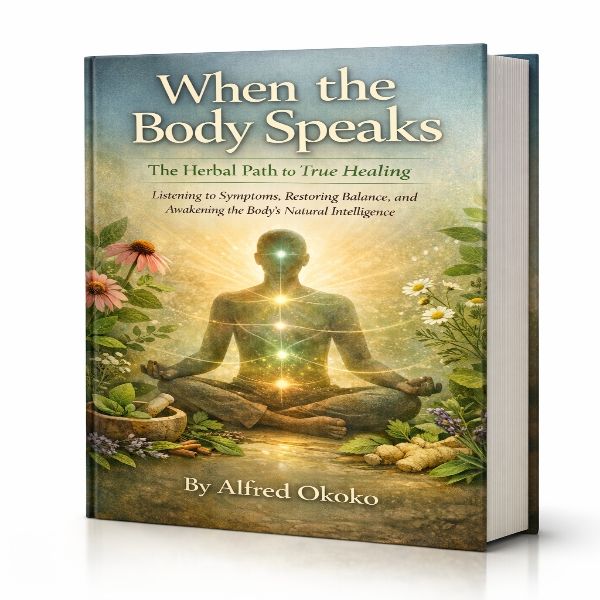
  • 10 Vital Lessons from When the Body Speaks:The Herbal Path to True Healing By Alfred Okoko|When The Body Speaks Online 📖

    January 31st, 2026

    Discover 10 vital lessons from When the Body Speaks by Alfred Okoko. Learn how symptoms communicate, how herbal healing restores balance, and how to work with your body’s natural intelligence for true healing.

    1. Your Symptoms Are Messages—Not Mistakes

    Pain, fatigue, inflammation, and discomfort are not random failures. They are your body’s language. This book teaches you how to interpret symptoms as guidance instead of fighting them as enemies—unlocking healing at the root.

    2. Healing Happens Through Listening, Not Forcing

    Quick fixes may silence symptoms, but they rarely restore balance. True healing begins when you stop overriding your body and start responding to its signals with care, patience, and understanding.

    3. The Body Is Designed to Heal Itself

    Your body carries an innate intelligence that knows how to repair, regenerate, and rebalance. When supported with the right conditions—nutrition, rest, herbs, and awareness—it naturally moves toward wellness.

    4. Digestion Is the Foundation of Total Health

    The gut is more than digestion—it affects immunity, energy, mood, and clarity. This book reveals how digestive signals are often the first whisper of imbalance—and how gentle herbal support can restore harmony.

    5. Stress Is a Biological Signal, Not a Personal Failure

    Tension, headaches, insomnia, and burnout are messages from the nervous system asking for recalibration. You’ll learn how to calm the body, regulate stress responses, and restore inner balance naturally.

    6. Fatigue Is Guidance, Not Weakness

    Chronic tiredness is your body asking for rest, nourishment, or hormonal support—not more pushing. This book reframes fatigue as a powerful teacher pointing you toward sustainable energy.

    7. Herbs Work Best When Paired with Awareness

    Herbs are not magic bullets—they are allies. When used intentionally and in harmony with the body’s signals, herbal remedies become powerful tools for restoring balance gently and effectively.

    8. Healing Is a Process, Not a Battle

    When you stop treating your body like something to conquer, everything changes. Healing becomes a partnership—one built on trust, consistency, and supportive daily habits that compound over time.

    9. Awareness Transforms Symptoms into Insight

    By noticing patterns—foods, stress, emotions, routines—you move from reacting to symptoms to understanding causes. Awareness turns confusion into clarity and empowers lasting change.

    10. Your Body Is Your Greatest Teacher

    Every chapter reinforces one truth: your body is not broken. It is communicating. When you learn to listen, you reconnect with a deep wisdom that guides you toward balance, vitality, and long-term wellness.

    This Book Is for You If:

    ✔ You’re tired of suppressing symptoms
    ✔ You want natural, herbal, body-aligned healing
    ✔ You believe wellness should feel intuitive—not aggressive
    ✔ You’re ready to partner with your body, not fight it

    👉 Ready to Start Listening to Your Body?

    When the Body Speaks is more than a book—it’s a mindset shift, a healing philosophy, and a practical guide to restoring balance naturally.

    Your body already knows the way.
    This book shows you how to listen.

    🔥 Get Your Copy Now on Payhip

    👉 Buy When the Body Speaks Today & Begin Your Healing Journey

    BUY NOW

    (Instant digital access. Start reading in minutes.)

  • Creating the Right Conditions for Healing: How to Support Your Body’s Natural Intelligence|When The Body Speaks Online 📖

    January 31st, 2026
    Preventive Health

    Healing happens when the right conditions are in place. Learn how nourishment, movement, rest, stress management, and natural support activate your body’s innate ability to heal and restore balance.

    Creating the Right Conditions for Healing

    Healing is not something you chase.
    It is something you allow.

    Your body was designed with an extraordinary capacity to repair, rebalance, and renew itself. This intelligence is always working in the background—regulating hormones, repairing tissues, fighting infections, and maintaining internal balance. The question is not whether your body can heal, but whether the environment you create allows it to do so.

    True healing is not about forcing change. It is about creating the right conditions so healing can occur naturally.


    Check Out ✔️ When The Body Speaks: The Herbal Path To True Healing


    Why Healing Depends on Conditions, Not Control

    Many people approach healing with urgency and pressure. They want quick fixes, instant results, and guaranteed timelines. While this mindset is understandable, it often works against the body’s natural rhythms.

    Healing is biological, not mechanical.

    Cells regenerate at specific rates. Hormones rebalance gradually. The nervous system requires safety and consistency to reset. When we try to rush the process, we add stress—and stress is one of the greatest barriers to healing.

    Creating the right conditions removes resistance. It shifts the body from survival mode into repair mode.


    Check ✔️ Out: Where The Body Speaks

    👇 Explore The Book

    The Body Heals Best in a State of Safety

    At the core of healing is nervous system regulation.

    When the body perceives danger—whether physical, emotional, or mental—it prioritizes survival over repair. Digestion slows, inflammation increases, immunity weakens, and energy becomes inconsistent.

    Healing accelerates when the body feels safe.

    Safety is created through:

    • Adequate nourishment
    • Predictable rest
    • Gentle movement
    • Emotional regulation
    • Reduced stress

    These are not luxuries. They are biological requirements.

    Nourishment: Supplying the Raw Materials for Repair

    Healing cannot occur without resources.

    Every cell in your body relies on nutrients to function, repair damage, and produce energy. When nourishment is insufficient or imbalanced, healing slows—no matter how strong your intention is.

    Supportive nourishment focuses on:

    • Whole, minimally processed foods
    • Adequate protein for tissue repair
    • Healthy fats for hormones and brain function
    • Complex carbohydrates for steady energy
    • Vitamins and minerals that drive cellular processes

    Food is more than calories. It is information that tells your body whether it has what it needs to rebuild.

    Rather than asking, What should I eliminate?
    Supportive healing asks, What can I add to support repair?

    Movement: Encouraging Circulation and Vitality

    Movement is one of the body’s most powerful healing signals.

    Gentle, consistent movement:

    • Improves blood flow and oxygen delivery
    • Stimulates lymphatic drainage
    • Supports joint mobility and muscle strength
    • Enhances mood and mental clarity
    • Reduces stiffness and chronic pain

    Healing movement is not about intensity. It is about rhythm.

    Walking, stretching, mobility exercises, yoga, and light strength training communicate safety to the body. They say, We are alive, capable, and supported.

    When movement is aligned with the body’s needs, it restores rather than depletes.

    Rest: Where Healing Truly Happens

    Rest is the foundation of recovery.

    During deep rest and quality sleep:

    • The nervous system resets
    • Growth hormone supports tissue repair
    • Immune cells regenerate
    • Hormones rebalance
    • The brain processes and clears waste

    Without adequate rest, the body remains in a state of low-grade stress—even if everything else is optimized.

    Creating the right conditions for healing means protecting rest fiercely. This includes:

    • Consistent sleep schedules
    • Reduced screen exposure before bed
    • Allowing physical and mental downtime
    • Releasing guilt around rest

    Rest is not inactivity. It is active restoration.

    Stress Management: Reducing Inflammation at the Source

    Chronic stress silently disrupts healing.

    When stress hormones remain elevated:

    • Inflammation increases
    • Digestion weakens
    • Hormonal balance suffers
    • Immune function declines
    • Healing processes slow

    Managing stress is not about eliminating challenges—it is about improving your response to them.

    Supportive practices include:

    • Conscious breathing
    • Meditation or prayer
    • Time in nature
    • Mindfulness and presence
    • Emotional expression

    As stress decreases, the body redirects energy from survival to repair.

    Herbal and Natural Support: Gentle Assistance for Balance

    Nature offers tools that complement the body’s intelligence.

    Herbs and natural remedies, when used appropriately, provide gentle support rather than forceful intervention. They work by enhancing existing processes instead of overriding them.

    Natural support may help:

    • Improve digestion
    • Strengthen immunity
    • Support circulation
    • Reduce inflammation
    • Encourage hormonal balance

    These tools are most effective when paired with foundational habits like nutrition, rest, and stress regulation. They are supporters—not substitutes for healthy conditions.

    Healing Is a Process, Not a Deadline

    One of the biggest obstacles to healing is impatience.

    Healing unfolds in stages:

    • Awareness of imbalance
    • Removal of obstacles
    • Consistent support
    • Gradual restoration
    • Long-term resilience

    Each stage requires time.

    Small daily actions may feel insignificant, but they compound. Over weeks and months, these choices reshape internal chemistry, nervous system patterns, and cellular health.

    Consistency matters more than intensity.

    Creating an Environment That Encourages Healing

    Healing does not occur in isolation. It happens within an environment—physical, emotional, and mental.

    A healing-friendly environment includes:

    • Predictable routines
    • Reduced overstimulation
    • Supportive relationships
    • Emotional safety
    • Self-compassion

    The body responds not only to what you do, but to how you live.

    When life feels chaotic, healing slows. When life feels supported, healing accelerates.

    Listening to the Body’s Feedback

    Creating the right conditions also means paying attention.

    The body constantly provides feedback:

    • Energy levels
    • Digestive comfort
    • Sleep quality
    • Mood stability
    • Pain or tension

    These signals guide adjustment. Healing becomes dynamic rather than rigid.

    Listening prevents overcorrection and allows fine-tuning instead of extremes.

    From Symptom Suppression to Root-Cause Restoration

    Force-based approaches aim to silence symptoms.

    Supportive healing asks why the symptom appeared.

    Fatigue may indicate poor sleep or nutrient depletion.
    Digestive issues may signal stress or food sensitivity.
    Pain may reflect immobility or inflammation.

    When conditions improve, symptoms often resolve without aggressive intervention.

    This is restoration—not suppression.

    Trusting the Body’s Timeline

    The body heals at its own pace.

    Tissues regenerate according to biology, not motivation. Hormones rebalance gradually. The nervous system requires repeated signals of safety.

    Trusting this timeline reduces stress, which itself enhances healing.

    When pressure is removed, progress often speeds up.

    The Role of Patience in Long-Term Health

    Patience is not passive—it is strategic.

    Rushing leads to burnout. Consistency builds resilience.

    Supportive healing values:

    • Daily habits over drastic changes
    • Progress over perfection
    • Sustainability over speed

    This approach not only heals current imbalances but prevents future ones.

    Healing Becomes Easier When the Conditions Are Right

    When nourishment is sufficient, movement is gentle, rest is protected, stress is managed, and support is aligned—the body requires less intervention.

    Healing becomes the default state rather than the exception.

    Symptoms become quieter. Energy stabilizes. The body feels cooperative instead of resistant.

    Creating Conditions Is an Act of Self-Respect

    At its core, creating the right conditions for healing is an act of respect.

    It says:

    • My body deserves care
    • My health is worth protecting
    • My well-being matters

    This mindset alone shifts physiology. The body responds to care with cooperation.

    Final Thoughts: Let Healing Happen

    Healing is not something you demand.
    It is something you allow by removing obstacles and providing support.

    When you nourish wisely, move gently, rest deeply, manage stress, and use natural support thoughtfully, you activate the body’s innate intelligence.

    You stop forcing outcomes.
    You start creating conditions.

    And when the conditions are right, healing is not a struggle—it is a natural response.

    Your body already knows how to heal.
    Your role is to give it the environment it needs to do so.

    Read More Articles
    • From Awareness to Action: How to Turn What You Know Into Real Health, Freedom, and Results|When The Body Speaks Online 📖March 25, 2026
      Writer: Alfred Okoko, Founder of the Natural Remission Protocol.“I help people reverse chronic conditions naturally and reclaim their health.” Discover how to turn awareness into action with simple daily habits that support real health, freedom, and clarity. Learn how to stop overthinking and start living intentionally. Introduction Awareness is powerful. It opens your eyes.It changes… Read more: From Awareness to Action: How to Turn What You Know Into Real Health, Freedom, and Results|When The Body Speaks Online 📖
    • Common Mistakes People Make When Trying to Heal Naturally (And How to Avoid Them)|When The Body Speaks Online 📖March 22, 2026
      Writer: Alfred Okoko, Founder of the Natural Remission Protocols“I help people reverse chronic conditions naturally and reclaim their health.” Avoid the most common mistakes people make when trying to heal naturally—learn what slows progress and how to achieve real, lasting results. Introduction Natural healing is powerful. It’s helped countless people reduce symptoms, regain energy, and… Read more: Common Mistakes People Make When Trying to Heal Naturally (And How to Avoid Them)|When The Body Speaks Online 📖
    • Erectile Dysfunction Home Remedies: Supporting Circulation, Confidence, and Whole-Body Health|When The Body Speaks Online 📖March 20, 2026
      Discover supportive home remedies for erectile dysfunction that focus on circulation, stress reduction, and whole-body health. Natural strategies inspired by When The Body Speaks. Introduction Erectile dysfunction (ED) is often discussed only in physical terms, yet it is closely connected to circulation, stress levels, emotional wellbeing, energy balance, and lifestyle patterns. For many men, changes… Read more: Erectile Dysfunction Home Remedies: Supporting Circulation, Confidence, and Whole-Body Health|When The Body Speaks Online 📖
    • Psychoneuroimmunology: How Thoughts and Emotions Influence the Immune System and Healing|When The Body Speaks Online 📖March 8, 2026
      Writer: Alfred Okoko, Founder of the Natural Remission Protocols“I help people reverse chronic conditions naturally and reclaim their health.” Discover how psychoneuroimmunology reveals the powerful connection between the mind and immune system. Learn how thoughts, emotions, and stress hormones influence inflammation, healing, and recovery. Introduction For many years, medicine treated the mind and body as… Read more: Psychoneuroimmunology: How Thoughts and Emotions Influence the Immune System and Healing|When The Body Speaks Online 📖
    • Belief Does Not Cure Disease—But It Can Open the Door to Healing|When The Body Speaks Online 📖March 8, 2026
      Writer: Alfred Okoko, Founder of the Natural Remission Protocols“I help people reverse chronic conditions naturally and reclaim their health.” Belief alone may not cure disease, but it can powerfully influence healing. Discover how mindset, hope, and emotional resilience support the body’s natural recovery process. Introduction In the world of health and wellness, there are two… Read more: Belief Does Not Cure Disease—But It Can Open the Door to Healing|When The Body Speaks Online 📖

  • The Power of Awareness: The Missing Link Between Symptoms and True Healing|When The Body Speaks Online 📖

    January 31st, 2026
    Mind Body Connection

    The power of awareness transforms healing from reactive symptom management into proactive, root-cause wellness. Learn how body awareness helps you listen, respond, and heal naturally.

    The Power of Awareness

    Awareness is where healing truly begins.

    Not with medication.
    Not with supplements.
    Not even with lifestyle changes.

    Healing begins the moment you notice.

    Awareness is the bridge between symptoms and solutions. Without it, we react blindly—treating discomfort as an inconvenience to silence rather than information to understand. With awareness, the body becomes a guide instead of a mystery.

    In a world that teaches us to ignore discomfort and push through exhaustion, awareness is a radical act of self-respect.


    Check Out ✔️ When The Body Speaks: The Herbal Path To True Healing


    Why Most Healing Fails Without Awareness

    Many people invest time, money, and effort into healing protocols, yet see limited results. The missing ingredient is often not discipline—but perception.

    Without awareness:

    • Symptoms are treated in isolation
    • Root causes remain hidden
    • Healing becomes trial and error
    • The body feels unpredictable and unreliable

    Awareness brings clarity. It allows you to connect cause and effect, action and response, habit and outcome. Once you see patterns, healing stops being confusing.

    Symptoms Are Messages, Not Mistakes

    Your body does not malfunction randomly.

    Every symptom carries meaning:

    • Fatigue signals depletion or overload
    • Pain signals imbalance or strain
    • Digestive discomfort signals stress, sensitivity, or poor timing
    • Brain fog signals nervous system fatigue or inflammation

    Symptoms are not punishments. They are communication.

    Awareness teaches you to ask better questions:

    • When did this start?
    • What was happening emotionally or physically at the time?
    • What habits consistently precede this feeling?

    This shift alone changes everything.

    Awareness Turns Guesswork Into Insight

    When you cultivate body awareness, patterns emerge naturally.

    You may notice:

    • Neck tension after hours of sitting
    • Low energy after poor sleep
    • Bloating after specific foods
    • Headaches during dehydration or stress
    • Anxiety during overstimulation

    Each observation is valuable data.

    Instead of reacting with frustration, awareness invites curiosity. You stop blaming your body and start understanding it.

    From Reactive Healing to Proactive Health

    Without awareness, healing is reactive. You wait for symptoms to become severe before responding.

    With awareness, healing becomes proactive.

    You respond early:

    • You rest before burnout
    • You hydrate before headaches
    • You move before stiffness becomes pain
    • You calm stress before digestion suffers

    Proactive awareness reduces intensity, duration, and frequency of symptoms. Small adjustments prevent large imbalances.

    Stress Awareness: The Hidden Root of Many Symptoms

    One of the most powerful insights awareness reveals is the impact of stress.

    Many physical symptoms originate in nervous system overload:

    • Digestive issues
    • Hormonal imbalance
    • Immune suppression
    • Chronic inflammation
    • Sleep disturbances

    When awareness connects stress to symptoms, healing shifts direction. Instead of chasing physical fixes alone, you address emotional and mental load.

    Calming the nervous system often improves multiple symptoms at once.

    Food Awareness: Listening Beyond Nutrition Labels

    Food awareness goes beyond calories and macros.

    It includes noticing:

    • How you feel after eating
    • Energy levels post-meal
    • Digestive comfort or discomfort
    • Mental clarity or fog
    • Emotional reactions to food

    Two people can eat the same meal and have completely different responses. Awareness personalizes healing.

    When you notice how food affects your body, nutrition becomes intuitive instead of restrictive.

    Movement Awareness: Respecting the Body’s Signals

    Awareness changes how you move.

    Instead of forcing exercise, you notice:

    • When your body needs mobility instead of intensity
    • When gentle movement reduces pain
    • When rest improves performance
    • When overtraining worsens fatigue

    Movement becomes supportive rather than punishing. The body responds with improved flexibility, strength, and resilience.

    Sleep Awareness: Understanding Recovery Signals

    Many people underestimate how deeply sleep affects healing.

    Awareness helps you notice:

    • Energy patterns throughout the day
    • Mood shifts after poor sleep
    • Cravings linked to exhaustion
    • Pain sensitivity when sleep-deprived

    Once these patterns are visible, prioritizing rest becomes logical—not optional.

    The Smallest Signals Matter

    Awareness is not only about major symptoms.

    Small signals are early warnings:

    • Mild headaches
    • Slight indigestion
    • Brief fatigue
    • Subtle irritability
    • Momentary stiffness

    Ignoring these whispers often leads to louder messages later. Awareness allows you to respond gently and early—preventing escalation.

    Awareness Builds Trust With the Body

    Many people feel disconnected from their bodies due to years of ignoring signals. Awareness rebuilds trust.

    When you listen and respond consistently:

    • The body feels safe
    • Symptoms become clearer, not scarier
    • Healing feels collaborative, not combative

    Trust reduces fear. Fear reduction alone improves healing outcomes.

    Awareness Does Not Mean Obsession

    True awareness is calm observation—not hypervigilance.

    It is:

    • Curious, not anxious
    • Gentle, not controlling
    • Responsive, not reactive

    Awareness creates space between sensation and reaction. That space is where wise decisions live.

    Awareness and Emotional Healing

    The body stores emotional experiences.

    Awareness helps you notice:

    • Tightness during stress
    • Fatigue after emotional suppression
    • Digestive changes during anxiety
    • Pain patterns linked to emotional strain

    When emotions are acknowledged, the body often relaxes. Emotional awareness supports physical healing more than many realize.

    Awareness Empowers Self-Healing

    Awareness shifts authority inward.

    Instead of relying solely on external answers, you develop internal guidance. You learn:

    • What drains you
    • What restores you
    • What triggers imbalance
    • What supports stability

    Healing becomes personalized, sustainable, and empowering.

    Awareness Is a Daily Practice

    Awareness is not a one-time realization—it’s a habit.

    Daily awareness includes:

    • Checking in with energy levels
    • Noticing stress responses
    • Observing digestion and mood
    • Reflecting on patterns

    Over time, this practice sharpens intuition and reduces guesswork.

    Healing Happens Faster When You Notice Sooner

    The earlier you notice imbalance, the less intervention is required.

    Awareness shortens recovery time.
    It reduces severity.
    It prevents chronic patterns.

    Most healing delays are not due to lack of solutions—but delayed awareness.

    Awareness Turns the Body Into an Ally

    When you stop fighting symptoms and start listening, the body becomes cooperative.

    It guides you toward:

    • Rest when needed
    • Movement when helpful
    • Nourishment when depleted
    • Calm when overstimulated

    Healing stops feeling complicated.

    Final Thoughts: Awareness Is the Foundation of Healing

    Before strategies, before protocols, before remedies—there is awareness.

    Awareness transforms healing from reaction to partnership. It teaches you to listen, adjust, and trust. It reminds you that your body is not broken—it is communicative.

    When you cultivate awareness, you don’t just heal symptoms.
    You prevent them.
    You understand them.
    You grow beyond them.

    Healing begins with noticing.

    And awareness is the most powerful medicine you already have.

    Read More Articles
    • From Awareness to Action: How to Turn What You Know Into Real Health, Freedom, and Results|When The Body Speaks Online 📖
      Writer: Alfred Okoko, Founder of the Natural Remission Protocol.“I help people reverse chronic conditions naturally and reclaim their health.” Discover how to turn awareness into action with simple daily habits that support real health, freedom, and clarity. Learn how to stop overthinking and start living intentionally. Introduction Awareness is powerful. It opens your eyes.It changes… Read more: From Awareness to Action: How to Turn What You Know Into Real Health, Freedom, and Results|When The Body Speaks Online 📖
    • Common Mistakes People Make When Trying to Heal Naturally (And How to Avoid Them)|When The Body Speaks Online 📖
      Writer: Alfred Okoko, Founder of the Natural Remission Protocols“I help people reverse chronic conditions naturally and reclaim their health.” Avoid the most common mistakes people make when trying to heal naturally—learn what slows progress and how to achieve real, lasting results. Introduction Natural healing is powerful. It’s helped countless people reduce symptoms, regain energy, and… Read more: Common Mistakes People Make When Trying to Heal Naturally (And How to Avoid Them)|When The Body Speaks Online 📖
    • Erectile Dysfunction Home Remedies: Supporting Circulation, Confidence, and Whole-Body Health|When The Body Speaks Online 📖
      Discover supportive home remedies for erectile dysfunction that focus on circulation, stress reduction, and whole-body health. Natural strategies inspired by When The Body Speaks. Introduction Erectile dysfunction (ED) is often discussed only in physical terms, yet it is closely connected to circulation, stress levels, emotional wellbeing, energy balance, and lifestyle patterns. For many men, changes… Read more: Erectile Dysfunction Home Remedies: Supporting Circulation, Confidence, and Whole-Body Health|When The Body Speaks Online 📖
    • Psychoneuroimmunology: How Thoughts and Emotions Influence the Immune System and Healing|When The Body Speaks Online 📖
      Writer: Alfred Okoko, Founder of the Natural Remission Protocols“I help people reverse chronic conditions naturally and reclaim their health.” Discover how psychoneuroimmunology reveals the powerful connection between the mind and immune system. Learn how thoughts, emotions, and stress hormones influence inflammation, healing, and recovery. Introduction For many years, medicine treated the mind and body as… Read more: Psychoneuroimmunology: How Thoughts and Emotions Influence the Immune System and Healing|When The Body Speaks Online 📖
    • Belief Does Not Cure Disease—But It Can Open the Door to Healing|When The Body Speaks Online 📖
      Writer: Alfred Okoko, Founder of the Natural Remission Protocols“I help people reverse chronic conditions naturally and reclaim their health.” Belief alone may not cure disease, but it can powerfully influence healing. Discover how mindset, hope, and emotional resilience support the body’s natural recovery process. Introduction In the world of health and wellness, there are two… Read more: Belief Does Not Cure Disease—But It Can Open the Door to Healing|When The Body Speaks Online 📖

  • Healing Is Support, Not Force: A Holistic Approach to Lasting Wellness|When The Body Speaks Online 📖

    January 31st, 2026
    Holistic Healing


    Healing is not about forcing the body to change but supporting its natural intelligence. Discover how nourishment, rest, movement, stress management, and gentle natural remedies create lasting balance and true healing.

    Healing Is Support, Not Force

    For generations, we have been taught to view healing as a battle. We are encouraged to “fight” disease, “conquer” symptoms, and “push through” pain. This language shapes how we treat our bodies—often with restriction, pressure, and control. We starve the body into weight loss, exhaust it into compliance, or silence symptoms without asking why they appeared in the first place.

    But the body was never meant to be dominated.

    True healing is not an act of force. It is an act of support.

    When you shift from trying to control your body to working with it, something profound happens. Healing becomes sustainable. Energy returns. Balance is restored—not because you demanded it, but because you created the right conditions for it to emerge naturally.


    Check Out ✔️ When The Body Speaks: The Herbal Path To True Healing


    The Cost of Forcing the Body

    Force-based healing often looks effective on the surface. Extreme diets may reduce symptoms quickly. Aggressive exercise routines may produce short-term results. Medications may suppress discomfort fast.

    Yet suppression is not the same as healing.

    When we override the body’s signals, we ignore its feedback system. Symptoms are not mistakes; they are messages. Pain, fatigue, inflammation, and digestive discomfort are ways the body communicates imbalance. Forcing the body to be quiet does not resolve the underlying issue—it delays it.

    Over time, this approach can lead to:

    • Hormonal imbalance
    • Chronic inflammation
    • Nervous system dysregulation
    • Nutrient depletion
    • Emotional burnout and disconnection from the body

    Healing that relies on pressure creates resistance. Healing that relies on support creates cooperation.

    The Body’s Innate Intelligence

    Your body is not passive. It is intelligent, adaptive, and constantly working to maintain balance—a process known as homeostasis. Every breath, heartbeat, and cellular repair process happens without conscious effort.

    This intelligence is ancient and precise.

    When you cut your skin, you do not instruct it how to heal. The body already knows. When you rest after exhaustion, energy slowly returns. When stress decreases, digestion improves. These are not coincidences; they are expressions of the body’s design.

    Healing succeeds when we respect this intelligence instead of overriding it.

    Healing as Guidance, Not Control

    A helpful way to understand supportive healing is through the metaphor of a river.

    You do not force a river to flow. You guide it by removing obstacles, reinforcing its banks, and allowing it to move naturally. If you block it, pressure builds. If you redirect it harshly, erosion follows. But when you work with its nature, it flows smoothly.

    Your body works the same way.

    Supportive healing removes obstacles:

    • Nutrient deficiencies
    • Chronic stress
    • Sleep deprivation
    • Sedentary habits
    • Emotional overload

    Once these barriers are addressed, the body often corrects itself.

    Nourishment: Providing the Building Blocks of Healing

    Food is not just fuel—it is information. Every nutrient sends signals that influence metabolism, immunity, hormone balance, and cellular repair.

    Supportive nourishment emphasizes:

    • Whole, minimally processed foods
    • Adequate protein for tissue repair
    • Healthy fats for hormones and brain health
    • Fiber-rich plants for digestion and detoxification
    • Micronutrients that support enzymatic processes

    Instead of restrictive eating, supportive healing asks:
    What does my body need to rebuild and restore?

    When the body receives consistent nourishment, cravings stabilize, energy improves, and inflammation often decreases naturally.

    Movement: Encouraging Flow, Not Punishment

    Movement is a form of communication with the body. It tells the nervous system that it is safe to circulate blood, deliver oxygen, and maintain mobility.

    Force-based movement punishes the body. Supportive movement partners with it.

    Gentle, consistent activity:

    • Improves circulation and lymphatic flow
    • Enhances joint lubrication and muscle tone
    • Supports mental clarity and emotional balance
    • Reduces stiffness and chronic pain

    Walking, stretching, yoga, light strength training, and mobility exercises all signal safety and vitality. Healing does not require exhaustion—it requires consistency and respect.

    Rest: Where Healing Accelerates

    Rest is often underestimated, yet it is one of the most powerful healing tools available.

    During deep rest and sleep:

    • The nervous system resets
    • Growth hormone supports tissue repair
    • The immune system strengthens
    • Hormones rebalance
    • The brain clears metabolic waste

    Without sufficient rest, even the best nutrition and exercise plan cannot compensate. Supportive healing honors rest as a biological necessity, not a luxury.

    Choosing rest is choosing recovery.

    Stress Management: Calming the Healing Environment

    Chronic stress keeps the body in survival mode. In this state, digestion slows, inflammation rises, and repair processes are deprioritized.

    Supportive healing focuses on regulating the nervous system through:

    • Mindful breathing
    • Meditation or prayer
    • Time in nature
    • Reduced mental overstimulation
    • Emotional expression and self-awareness

    When stress decreases, healing capacity increases. The body shifts from “fight or flight” into “rest and repair,” where true restoration occurs.

    Herbal and Natural Support: Gentle Assistance, Not Aggression

    Nature offers tools that work in harmony with the body. Herbs and natural remedies tend to support systems rather than overpower them.

    When chosen thoughtfully, they can:

    • Aid digestion
    • Support immune resilience
    • Improve circulation
    • Reduce inflammation gently
    • Encourage balance rather than dependency

    Supportive healing does not rely on constant intervention. It uses natural support as a bridge—helping the body regain strength so it can function independently.

    Healing Is a Process, Not an Event

    One of the biggest misconceptions about healing is the expectation of instant results. Force-based approaches promise speed. Supportive healing promises sustainability.

    Healing unfolds in layers:

    • Awareness
    • Adjustment
    • Consistency
    • Trust

    Small daily choices compound over time. What seems insignificant today becomes transformative over months and years.

    Patience is not passive—it is powerful.

    Listening Instead of Controlling

    Supportive healing begins with listening.

    When fatigue appears, the question is not, How do I push harder?
    It is, What is my body asking for?

    When pain arises, the question is not, How do I silence this?
    It is, What imbalance is being revealed?

    Listening builds trust. And when the body feels safe, it cooperates.

    From Symptom Management to Root-Cause Healing

    Force treats symptoms as problems to eliminate. Support treats symptoms as guides.

    Instead of asking:

    • “How do I stop this?”

    Supportive healing asks:

    • “Why did this begin?”

    This shift moves healing from reaction to prevention. Many chronic issues improve when the root cause—stress, nutrient depletion, inactivity, poor sleep—is addressed consistently.

    The Long-Term Benefits of Supportive Healing

    When you support rather than force your body, you cultivate:

    • Greater energy stability
    • Stronger immune resilience
    • Improved emotional regulation
    • Better digestion and metabolism
    • A deeper sense of connection to your body

    Healing becomes less about constant fixing and more about ongoing alignment.

    Trusting the Body Again

    Perhaps the most transformative aspect of supportive healing is rebuilding trust.

    Many people feel disconnected from their bodies after years of ignoring signals. Supportive healing restores that relationship. It reminds you that your body is not broken—it is responsive.

    When given the right environment, the body does what it was designed to do.

    Heal.

    Final Thoughts: Choosing Support Over Force

    Healing is not about domination.
    It is about partnership.

    When you nourish, move gently, rest deeply, manage stress, and offer natural support, you activate your body’s innate wisdom. You stop fighting yourself and start working with yourself.

    And in that shift, healing becomes not only possible—but sustainable.

    Your body is not asking to be forced.
    It is asking to be supported.

    Read More Articles
    • From Awareness to Action: How to Turn What You Know Into Real Health, Freedom, and Results|When The Body Speaks Online 📖
      Writer: Alfred Okoko, Founder of the Natural Remission Protocol.“I help people reverse chronic conditions naturally and reclaim their health.” Discover how to turn awareness into action with simple daily habits that support real health, freedom, and clarity. Learn how to stop overthinking and start living intentionally. Introduction Awareness is powerful. It opens your eyes.It changes… Read more: From Awareness to Action: How to Turn What You Know Into Real Health, Freedom, and Results|When The Body Speaks Online 📖
    • Common Mistakes People Make When Trying to Heal Naturally (And How to Avoid Them)|When The Body Speaks Online 📖
      Writer: Alfred Okoko, Founder of the Natural Remission Protocols“I help people reverse chronic conditions naturally and reclaim their health.” Avoid the most common mistakes people make when trying to heal naturally—learn what slows progress and how to achieve real, lasting results. Introduction Natural healing is powerful. It’s helped countless people reduce symptoms, regain energy, and… Read more: Common Mistakes People Make When Trying to Heal Naturally (And How to Avoid Them)|When The Body Speaks Online 📖
    • Erectile Dysfunction Home Remedies: Supporting Circulation, Confidence, and Whole-Body Health|When The Body Speaks Online 📖
      Discover supportive home remedies for erectile dysfunction that focus on circulation, stress reduction, and whole-body health. Natural strategies inspired by When The Body Speaks. Introduction Erectile dysfunction (ED) is often discussed only in physical terms, yet it is closely connected to circulation, stress levels, emotional wellbeing, energy balance, and lifestyle patterns. For many men, changes… Read more: Erectile Dysfunction Home Remedies: Supporting Circulation, Confidence, and Whole-Body Health|When The Body Speaks Online 📖
    • Psychoneuroimmunology: How Thoughts and Emotions Influence the Immune System and Healing|When The Body Speaks Online 📖
      Writer: Alfred Okoko, Founder of the Natural Remission Protocols“I help people reverse chronic conditions naturally and reclaim their health.” Discover how psychoneuroimmunology reveals the powerful connection between the mind and immune system. Learn how thoughts, emotions, and stress hormones influence inflammation, healing, and recovery. Introduction For many years, medicine treated the mind and body as… Read more: Psychoneuroimmunology: How Thoughts and Emotions Influence the Immune System and Healing|When The Body Speaks Online 📖
    • Belief Does Not Cure Disease—But It Can Open the Door to Healing|When The Body Speaks Online 📖

      Writer: Alfred Okoko, Founder of the Natural Remission Protocols“I help people reverse chronic conditions naturally and reclaim their health.” Belief alone may not cure disease, but it can powerfully influence healing. Discover how mindset, hope, and emotional resilience support the body’s natural recovery process. Introduction In the world of health and wellness, there are two… Read more: Belief Does Not Cure Disease—But It Can Open the Door to Healing|When The Body Speaks Online 📖
←Previous Page
1 … 7 8 9

Blog at WordPress.com.


Loading Comments...
 

    • Subscribe Subscribed
      • When The Body Speaks Online
      • Already have a WordPress.com account? Log in now.
      • When The Body Speaks Online
      • Subscribe Subscribed
      • Sign up
      • Log in
      • Report this content
      • View site in Reader
      • Manage subscriptions
      • Collapse this bar