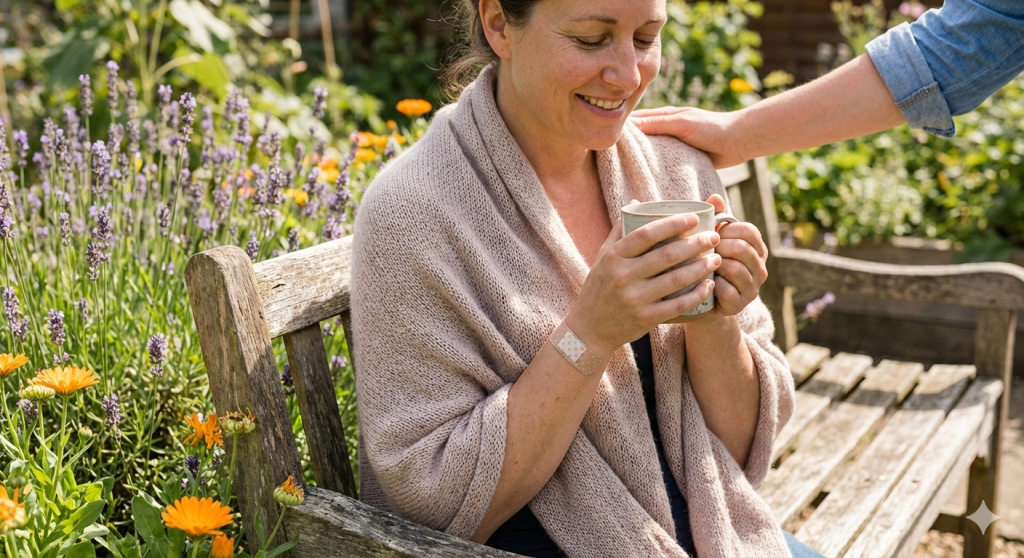
Healing is not about forcing the body to change but supporting its natural intelligence. Discover how nourishment, rest, movement, stress management, and gentle natural remedies create lasting balance and true healing.
Healing Is Support, Not Force
For generations, we have been taught to view healing as a battle. We are encouraged to “fight” disease, “conquer” symptoms, and “push through” pain. This language shapes how we treat our bodies—often with restriction, pressure, and control. We starve the body into weight loss, exhaust it into compliance, or silence symptoms without asking why they appeared in the first place.
But the body was never meant to be dominated.
True healing is not an act of force. It is an act of support.
When you shift from trying to control your body to working with it, something profound happens. Healing becomes sustainable. Energy returns. Balance is restored—not because you demanded it, but because you created the right conditions for it to emerge naturally.
Check Out ✔️ When The Body Speaks: The Herbal Path To True Healing
The Cost of Forcing the Body
Force-based healing often looks effective on the surface. Extreme diets may reduce symptoms quickly. Aggressive exercise routines may produce short-term results. Medications may suppress discomfort fast.
Yet suppression is not the same as healing.
When we override the body’s signals, we ignore its feedback system. Symptoms are not mistakes; they are messages. Pain, fatigue, inflammation, and digestive discomfort are ways the body communicates imbalance. Forcing the body to be quiet does not resolve the underlying issue—it delays it.
Over time, this approach can lead to:
- Hormonal imbalance
- Chronic inflammation
- Nervous system dysregulation
- Nutrient depletion
- Emotional burnout and disconnection from the body
Healing that relies on pressure creates resistance. Healing that relies on support creates cooperation.
The Body’s Innate Intelligence
Your body is not passive. It is intelligent, adaptive, and constantly working to maintain balance—a process known as homeostasis. Every breath, heartbeat, and cellular repair process happens without conscious effort.
This intelligence is ancient and precise.
When you cut your skin, you do not instruct it how to heal. The body already knows. When you rest after exhaustion, energy slowly returns. When stress decreases, digestion improves. These are not coincidences; they are expressions of the body’s design.
Healing succeeds when we respect this intelligence instead of overriding it.
Healing as Guidance, Not Control
A helpful way to understand supportive healing is through the metaphor of a river.
You do not force a river to flow. You guide it by removing obstacles, reinforcing its banks, and allowing it to move naturally. If you block it, pressure builds. If you redirect it harshly, erosion follows. But when you work with its nature, it flows smoothly.
Your body works the same way.
Supportive healing removes obstacles:
- Nutrient deficiencies
- Chronic stress
- Sleep deprivation
- Sedentary habits
- Emotional overload
Once these barriers are addressed, the body often corrects itself.
Nourishment: Providing the Building Blocks of Healing
Food is not just fuel—it is information. Every nutrient sends signals that influence metabolism, immunity, hormone balance, and cellular repair.
Supportive nourishment emphasizes:
- Whole, minimally processed foods
- Adequate protein for tissue repair
- Healthy fats for hormones and brain health
- Fiber-rich plants for digestion and detoxification
- Micronutrients that support enzymatic processes
Instead of restrictive eating, supportive healing asks:
What does my body need to rebuild and restore?
When the body receives consistent nourishment, cravings stabilize, energy improves, and inflammation often decreases naturally.
Movement: Encouraging Flow, Not Punishment
Movement is a form of communication with the body. It tells the nervous system that it is safe to circulate blood, deliver oxygen, and maintain mobility.
Force-based movement punishes the body. Supportive movement partners with it.
Gentle, consistent activity:
- Improves circulation and lymphatic flow
- Enhances joint lubrication and muscle tone
- Supports mental clarity and emotional balance
- Reduces stiffness and chronic pain
Walking, stretching, yoga, light strength training, and mobility exercises all signal safety and vitality. Healing does not require exhaustion—it requires consistency and respect.
Rest: Where Healing Accelerates
Rest is often underestimated, yet it is one of the most powerful healing tools available.
During deep rest and sleep:
- The nervous system resets
- Growth hormone supports tissue repair
- The immune system strengthens
- Hormones rebalance
- The brain clears metabolic waste
Without sufficient rest, even the best nutrition and exercise plan cannot compensate. Supportive healing honors rest as a biological necessity, not a luxury.
Choosing rest is choosing recovery.
Stress Management: Calming the Healing Environment
Chronic stress keeps the body in survival mode. In this state, digestion slows, inflammation rises, and repair processes are deprioritized.
Supportive healing focuses on regulating the nervous system through:
- Mindful breathing
- Meditation or prayer
- Time in nature
- Reduced mental overstimulation
- Emotional expression and self-awareness
When stress decreases, healing capacity increases. The body shifts from “fight or flight” into “rest and repair,” where true restoration occurs.
Herbal and Natural Support: Gentle Assistance, Not Aggression
Nature offers tools that work in harmony with the body. Herbs and natural remedies tend to support systems rather than overpower them.
When chosen thoughtfully, they can:
- Aid digestion
- Support immune resilience
- Improve circulation
- Reduce inflammation gently
- Encourage balance rather than dependency
Supportive healing does not rely on constant intervention. It uses natural support as a bridge—helping the body regain strength so it can function independently.
Healing Is a Process, Not an Event
One of the biggest misconceptions about healing is the expectation of instant results. Force-based approaches promise speed. Supportive healing promises sustainability.
Healing unfolds in layers:
- Awareness
- Adjustment
- Consistency
- Trust
Small daily choices compound over time. What seems insignificant today becomes transformative over months and years.
Patience is not passive—it is powerful.
Listening Instead of Controlling
Supportive healing begins with listening.
When fatigue appears, the question is not, How do I push harder?
It is, What is my body asking for?
When pain arises, the question is not, How do I silence this?
It is, What imbalance is being revealed?
Listening builds trust. And when the body feels safe, it cooperates.
From Symptom Management to Root-Cause Healing
Force treats symptoms as problems to eliminate. Support treats symptoms as guides.
Instead of asking:
- “How do I stop this?”
Supportive healing asks:
- “Why did this begin?”
This shift moves healing from reaction to prevention. Many chronic issues improve when the root cause—stress, nutrient depletion, inactivity, poor sleep—is addressed consistently.
The Long-Term Benefits of Supportive Healing
When you support rather than force your body, you cultivate:
- Greater energy stability
- Stronger immune resilience
- Improved emotional regulation
- Better digestion and metabolism
- A deeper sense of connection to your body
Healing becomes less about constant fixing and more about ongoing alignment.
Trusting the Body Again
Perhaps the most transformative aspect of supportive healing is rebuilding trust.
Many people feel disconnected from their bodies after years of ignoring signals. Supportive healing restores that relationship. It reminds you that your body is not broken—it is responsive.
When given the right environment, the body does what it was designed to do.
Heal.
Final Thoughts: Choosing Support Over Force
Healing is not about domination.
It is about partnership.
When you nourish, move gently, rest deeply, manage stress, and offer natural support, you activate your body’s innate wisdom. You stop fighting yourself and start working with yourself.
And in that shift, healing becomes not only possible—but sustainable.
Your body is not asking to be forced.
It is asking to be supported.
- From Awareness to Action: How to Turn What You Know Into Real Health, Freedom, and Results|When The Body Speaks Online 📖Writer: Alfred Okoko, Founder of the Natural Remission Protocol.“I help people reverse chronic conditions naturally and reclaim their health.” Discover how to turn awareness into action with simple daily habits that support real health, freedom, and clarity. Learn how to stop overthinking and start living intentionally. Introduction Awareness is powerful. It opens your eyes.It changes… Read more: From Awareness to Action: How to Turn What You Know Into Real Health, Freedom, and Results|When The Body Speaks Online 📖
- Common Mistakes People Make When Trying to Heal Naturally (And How to Avoid Them)|When The Body Speaks Online 📖Writer: Alfred Okoko, Founder of the Natural Remission Protocols“I help people reverse chronic conditions naturally and reclaim their health.” Avoid the most common mistakes people make when trying to heal naturally—learn what slows progress and how to achieve real, lasting results. Introduction Natural healing is powerful. It’s helped countless people reduce symptoms, regain energy, and… Read more: Common Mistakes People Make When Trying to Heal Naturally (And How to Avoid Them)|When The Body Speaks Online 📖
- Erectile Dysfunction Home Remedies: Supporting Circulation, Confidence, and Whole-Body Health|When The Body Speaks Online 📖Discover supportive home remedies for erectile dysfunction that focus on circulation, stress reduction, and whole-body health. Natural strategies inspired by When The Body Speaks. Introduction Erectile dysfunction (ED) is often discussed only in physical terms, yet it is closely connected to circulation, stress levels, emotional wellbeing, energy balance, and lifestyle patterns. For many men, changes… Read more: Erectile Dysfunction Home Remedies: Supporting Circulation, Confidence, and Whole-Body Health|When The Body Speaks Online 📖
- Psychoneuroimmunology: How Thoughts and Emotions Influence the Immune System and Healing|When The Body Speaks Online 📖Writer: Alfred Okoko, Founder of the Natural Remission Protocols“I help people reverse chronic conditions naturally and reclaim their health.” Discover how psychoneuroimmunology reveals the powerful connection between the mind and immune system. Learn how thoughts, emotions, and stress hormones influence inflammation, healing, and recovery. Introduction For many years, medicine treated the mind and body as… Read more: Psychoneuroimmunology: How Thoughts and Emotions Influence the Immune System and Healing|When The Body Speaks Online 📖
- Belief Does Not Cure Disease—But It Can Open the Door to Healing|When The Body Speaks Online 📖Writer: Alfred Okoko, Founder of the Natural Remission Protocols“I help people reverse chronic conditions naturally and reclaim their health.” Belief alone may not cure disease, but it can powerfully influence healing. Discover how mindset, hope, and emotional resilience support the body’s natural recovery process. Introduction In the world of health and wellness, there are two… Read more: Belief Does Not Cure Disease—But It Can Open the Door to Healing|When The Body Speaks Online 📖
 When The Body Speaks Online